Many of the fine scratches on a car's paint come from washing it, not from the dirt itself. This guide walks through a hand wash that lifts grit away from the surface, from the first rinse to the last towel, so each wash leaves the finish in better shape than before.
Road dirt is mostly fine grit, and grit is what marks paint. Drag a dry rag or a gritty sponge across a dusty panel and you rub that grit into the clear coat, leaving faint swirls that show in low sun. A careful wash lifts the grit off first, then cleans what is left with as little pressure as possible.
You do not need a pressure washer or a garage to do this well. A hose, two buckets, a pH-neutral car shampoo, a soft wash mitt and a couple of drying towels cover it. Pick a shaded spot, wait for the panels to cool, and check your local rules before washing where the water runs into a storm drain.
Signs it needs attention
- Dust or a gray film that smears when you touch it
- Water spots left behind after the last rain
- A rough, gritty feel when you run a finger along a door
- Bugs and road grime stuck across the front bumper
- Color that looks dull even on a bright day
- A dark line of dirt along the lower doors and sills
Rinse before anything touches the paint
Start with the car in shade and the panels cool to the hand. Rinse the whole car from the roof down with a steady spray, letting the water carry off loose dust and sand before a mitt goes near it. If you are cleaning the wheels as well, do them first so their dirty spray does not land on washed panels.
On a very dirty car, a foam or pre-wash spray left to sit for the time on its label softens the grime so more of it rinses away. Do not let it dry on the paint. Rinse it off fully, again working from the top down, before you start the contact wash.
- Shade and a cool surface before the first drop
- Roof first, then down to the sills
- Extra rinsing on the lower panels and wheel arches
The two-bucket wash
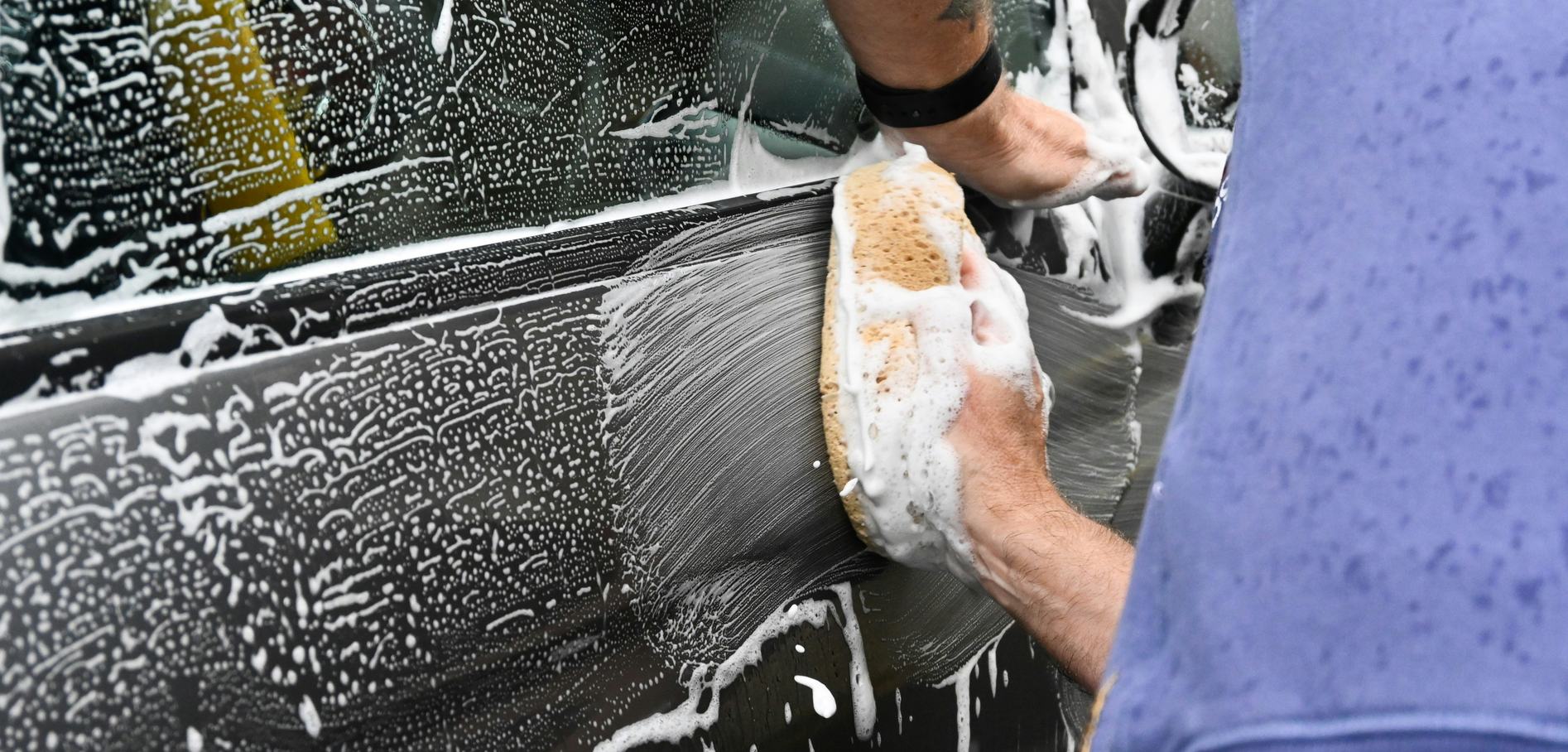
Fill one bucket with water and car shampoo mixed as the label says, and the other with plain water. Both get a grit guard on the bottom. Load the mitt from the shampoo bucket, wash a single panel with straight, light passes, then rinse the mitt in the plain bucket and wring it out before loading it again.
Work from the top of the car down, because the lower panels carry the worst grit and should be washed last. Rinse each section before it dries, especially on a warm or breezy day. If you drop the mitt on the ground, stop and swap it for a clean one rather than putting it back on the paint.
- One panel at a time, rinsing the mitt between each
- Straight passes, not circles, with almost no pressure
- A second mitt kept aside for the lowest panels
Drying without marking the paint
Give the car a last rinse with a gentle, open flow of water rather than a hard spray, so it sheets off the panels and leaves less behind. Then dry it straight away, before the sun or the wind can leave mineral spots. Lay a large, soft drying towel flat on a panel and draw it slowly toward you.
Pat or blot rather than scrub, and turn the towel to a dry side often. Open the doors, the trunk and the fuel door to wipe the jambs and weather seals, where water hides and later runs down the clean paint. A soft second towel helps around mirrors, badges and trim.
- A gentle final flow so water sheets off
- Towel laid flat and drawn across, never scrubbed
- Door jambs and seals wiped before you finish
Keeping it clean between washes
Light dust between washes can come off with a quick detailer spray and a clean microfiber towel. Mist a small area, fold the towel, and lift the dust in one direction. A car that is properly dirty needs a full wash instead, because wiping grit off dry paint is how swirls start.
Wash often enough that dirt never gets the chance to bake on, and sooner after a salty road, bird droppings or a dusty drive. After any wash the brakes may be wet, so test them gently at low speed before you drive on. A protected finish, covered in the paint guide, makes every later wash quicker.
- Quick detailer only for a light layer of dust
- Droppings and bugs taken off the same day
- Brakes tested gently at low speed after each wash
The kit
- Two buckets and two grit guardsShampoo water in one, rinse water in the other; the guards hold grit down low.
- A pH-neutral car shampooLifts road film without stripping wax or drying out rubber trim.
- A soft wash mittDeep fibers pull grit away from the paint instead of pressing it in.
- A hose with an adjustable nozzleA firm spray for the first rinse and a gentle flow for the last.
- Large microfiber drying towelsSoak up water in a single pass with very little rubbing.
- A quick detailer sprayAdds slip so light dust can be lifted between washes.
Generic items only; Prime Axle names no products. Read each product's label and follow it.
What to leave out
- Dish soap: it strips wax and dries out rubber seals
- Washing in direct sun: water and shampoo dry into spots
- A dropped mitt back on the paint: it carries grit
- Circles with hard pressure: they leave swirl marks
- Letting the car air-dry: minerals stay behind as spots
Questions about washing the outside
Dish soap is made to cut grease off plates, and on a car it takes wax and sealant off along with the dirt. It can also dry out rubber seals and plastic trim. A pH-neutral car shampoo is the gentler everyday choice.
It depends on the wash and how well it is kept. Brushes that are not cleaned can drag grit from earlier cars across yours, while a touchless wash relies on stronger chemicals instead of contact. The article on where to wash your car compares the options.
Often enough that dirt never sits long enough to bake on, which depends on where you drive and park. A car parked under trees or driven on salted roads needs washing sooner than one kept in a garage. Water that stops beading and a gritty feel on the paint both say it is due.